Hanuman Tail and Film Reel
(Article published in February - 2019 in the monthly issue of 'Ayal Cinema')

In 1882, 'Étienne Jules Marey' recorded in 12 frames per second on a Chronophotograph gun and captured birds flying in the sky. From that onwards the word 'SHOT' began to come into the Industry. The shot in the film roll refers to the frames between the two pieces that are cut. Currently, the video from the record to the cut in digital can be considered as a shot.

No matter how many rehearsals are done, it is customary to take a take again to correct the mistake in the cinematography on the sets, in the dialogues of the actors or in some way or the other. In this way, many takes go on till the scene written by the director is correct. In the 95th take, 'Stanley Kubrick' has finalized a shot in a scene in his film 'Eyes Wide Shut (1999)' where 'Tom Cruise' walks through the gate.
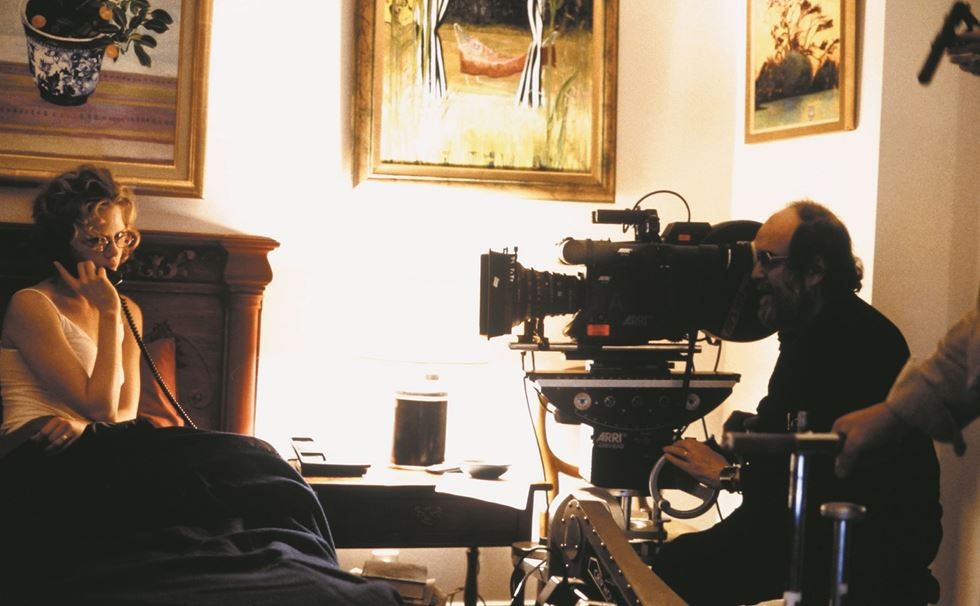
The take that the director decides on is called "OK Take". Similarly, other scenes taken from multiple angles will be taken in multiple takes until they come out correctly and OK Takes will be noted in it. A scene is the combination of several okay shots. The great advantage of filming a scene from different angles is that many fixes and improvements can be made in the scene during the editing.
But beyond this, there is an exciting part named "LONG TAKE". That means taking the whole scene in one shot without any cuts. For more clarity, the whole thing is to be taken in long scenes like 'Hanuman's tail'. It is correct to call it 'long take' because 'long shot' means a far-flung shot.
Don't think about what's interesting with this. The excitement is hereafter. Because taking it in one shot is not an easy task. If something goes wrong with conversations, camera movements, light settings, etc., you should start from where you started again.
Now let's say you take a short film for 5 minutes in one shot where two people talk. Even if the last verse is wrong in the 4:55th minute, it should start again from scratch. For instance, the film 'Night's Shadow', which was shot in India as an experimental effort for this purpose, is one of the best examples.

In the 94th minute of the film, which lasts for 95 minutes, with only 1 minute left, if someone who is acting in the scene Sneeze, looks at the camera, or if something goes wrong with the camera movement, the director has to hit the head and start from scratch again. The director has re-shot the film 23 times with a bang on his head. That is, the entire film, which ran for 95 minutes, had to be shot 23 times. The film's director R Parthiban noted that even after 90 days of diligent rehearsals, 23 retakes had to be taken due to challenges such as technical issues in the shoot and unexpected minor mistakes by the actors.
It is possible only with great courage, patience and planning to take a scene like this to the fullest. No matter how many practical difficulties there are, the interest of directors and cinematographers in this 'long take' never diminishes.
Some Examples:
Now let's take that painful scene in The Revenant (2015) where the hero "Leonardo DiCaprio" struggles with the bear. To protect her cubs, the mother bear attacks, bites, throws, climbs and tramples on the hero. In the end, the hero fights back and kills the bear and survives.

When you see all this in one scene without any cuts, your mind will go into the forest Unconsciously. The reliability of the time and location of the scene will increase. (Remember the scene in Gravity (2013) film, where 'Sandra Bullock' is caught in a space storm?) Now your entire focus will be only on that person. When he is in pain, the impact will be on you as well.
(P.S: Despite working with 8 Oscar directors, DiCaprio who has been nominated for best actor award 5 times and has not yet won an Oscar even once, won an Oscar through this film.)
Orson Welles, who directed Citizen Kane (1941), took the opening scene of his film 'Touch of evil' (1958) as a 3 minute 30 seconds long shot. It's a classic in long takes because of the miracle that the camera alternately follows a bomb-mounted car and a couple who are flirting on the road and moves across several roads.
Similarly, in the climax scene of Kill Bill 1 (2003), the camera which moves from behind the artists playing in the nightclub, follows the heroine who comes down the stairs to the side of the profile, rising above the head and following the food-making room to the bathroom. She went into a room and began to take off her jerkin, moving towards a woman leaving the room, following the owner from the kitchen with the liquor to the hall, following her up the stairs, passing a woman who was singing in between and reaching the room where Willy was sitting upstairs, and after they reached the room where Willy was standing, the camera moved back to one of Willy's henchmen who was leaving, and beyond the nearby dancing crowd into the toilet. The camera stops to go and waits for the heroine inside the room to turn on the lamp.
(Thus a long shot moves with commas and cuts where the end is placed. All the commas I have placed in the above paragraph are camera moves called PAN. Full stop is cut).
From Taxi Driver (1976), Raging Bull (1980) to The Wolf of Wall Street (2013), silence (2016), Martin Scorsese the director who still amazes us, Directed Goodfellas (1990) with a beautiful 3-minute long take fitted to the Steadicam.
A man who brings his girlfriend to dinner for the first time, starts by giving her tips on car parking and takes her through the kitchen at the back door of the Hotel as huge crowd waits in line outside. The fact that he is warmly welcomed by everyone on the way, that he is given a special table, and that he is presented with a bottle of wine as a gift, all that amazes the woman. You can imagine for yourself how boring it would have been if it had been divided into several shots. Martin Scorsese has done this scene in the 8th take.
When a scene is divided into several shots, the actors will have to pay attention to it in order to create a continuity with the pre- and post-shots. No matter how big shot an actor is, when you stop and take shots, the continuity of emotions is cut off to a small extent. There will be a continuity in it as the emotion that the actors express in the long takes is not broken.
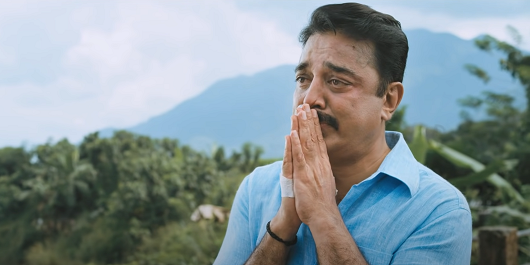
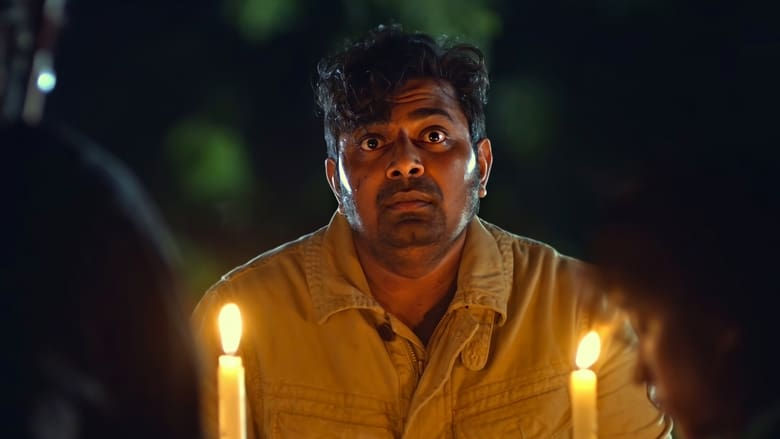
For example: In the climax of 'Papanasam (2015)', Kamal is seen crying for being forced to commit murder and apologizing for it. Next up is the story Mysskin narrates in the film 'Onaayum Aattukkuttiyum (2013)' in the light of candles. Mysskin had done the story in one shot with tears and momentary music, we had almost never seen in the film.
Rope (1948)

The first film I've ever seen to be more full of long takes as far as I know is 'ROPE (1948)'. The film runs for 80 minutes and has only 10 shots in total. Each one is long shots ranging from a minimum of 4 minutes to a maximum of 10 minutes. The film will have the same set and a camera that travels with the characters. No matter how much we praise Hitchcock for such an experiment. Actually, He made the film based on the play 'Rope', rather than the fact that his intention was to experiment. The specialty of the play was that it was all one scene.
Usually, the play starts after the screen is lifted up and ends only after the screen ends. It's a thriller that can continue to take place in the same scene without changing any scene in the middle. Hitchcock felt that the impact he felt when he saw it should be felt by the audience watching his film as well. So he wanted to show the audience as if the entire film was happening in one shot without any cuts. However, the film camera can only carry a maximum of 1000 feet long film. It can run for about 10 minutes. So Hitchcock divided the shots accordingly into shots and filmed the next shot from where one shot ended and even the subsequent shot change was not normally visible.
Birdman (2014)

The Editor can't help in any way in the long take shots. But each of the long takes taken can be combined at one point or the other and shown as a single long take image. When you look at 'Birdman', it looks like the entire film has been shot in one shot. But these were made possible by the editing and graphics. This means that each of the scenes taken in the same shot will be compiled through some link in the middle.
The darkness that engulfs in the middle as we move from one room to another, when the camera turns (PAN). In this way, through one or the other connection, he made the subsequent scenes into a combination and transmitted the feeling of being taken in a single take.
Walter Murch simplifies the explanation for this.
"When our eyes move from one point to another, there is naturally a small gap in that point. But because our brain fills the gap with the memory of the first point, we can't feel that gap. That's the biggest strength of this film."
When the film's director 'Alejandro González Iñárritu' was asked about shooting 'Birdman' in a single consecutive shot, he replied as,
"As soon as I finished writing the script, The format became clear to me. As a 51 year old man, I understood that life moves only because of a combination of scenes. Since we open our eyes in the morning, we record within ourselves continuously the whole day without any cuts. The cut is required only when we look back at our lives in memory and talk about life. So, I decided to move the film with a series of non-stop scenes....
Victoria (2015)

It might be a train meeting, a party, a wedding event. Accidentally, a person you see or meet can make you leads into a different scenario. The same thing happens in this film's female lead Victoria. But in a different form mixed up with violence.
She comes out at four o'clock after getting drunk at the bar and meets four people there. They steal liquor bottles in a shop and drink together. They spend the whole night. She falls in love with one of them. Next, they break into a bank and steal the money. While the others get caught by the police and she escaped in the gun shoot and come back to the hotel with her Lover. There she notices blood oozing out of her lover's body. While she holds his hands, her boyfriend passes away. She goes out crying with the 50k Euros she has looted. The film concludes with police carts passing her by with sirens on the roads. Thus the next two hours of her life were the film "Victoria".
Since the film holds lot of English dialogues, the film couldn't qualify for the Best Foreign Film category at the Oscars. Anything can happen at any time in our lives, says 'Victoria'.
About the film, director 'Sebastian Schipper' said:
Creating a movie in a single unbroken shot is a touch of madness. When I initially pitched the idea of crafting this film without a single cut, nobody bought into it. Yet, our conviction remained unshaken. With that unwavering certainty, we embarked on a daring journey, seamlessly weaving our story through a breathtaking odyssey across 22 distinct locations.
Russian Ark (2002)

Alexander Sokurov, who directed the film, was one of the most notable creators who created the cinemas that could accommodate the deeper assimilation of the audience with their unique, uninterrupted, long scenes without much movement, as opposed to mainstream cinema, which has a lot of fast-paced scenery. He is a magician in creating some kind of uniqueness in scenes, colors, and musical compositions.
While the film didn't strike gold at the box office, it emerged as a monumental triumph for its time. Spanning a captivating 96 minutes, it unfolded through an uninterrupted, mesmerizing Steadicam sequence set within the frost-laden confines of the Cold House in St. Petersburg, Russia.
In the wake of a man's untimely demise in a tragic accident, his spirit transcends into an ethereal observer, lingering within the walls of the grand palace. As the Spirit traverses the vast expanse of the majestic estate, he beholds a breathtaking panorama of events, lives, and the tapestry of occurrences spanning three centuries. A cinematic canvas unfurls across 33 meticulously curated rooms, boasting a cast of 2,000 individuals, capturing the essence of this spectral journey—finally crystallizing into cinematic brilliance on the fourth, and only the fourth, meticulous take.
In the realm of contemporary filmmaking, the advent of digital cinematography has certainly bestowed a degree of visual lucidity, albeit not without its own set of challenges—gone are the days of perilous film rolls running dry within cameras. Yet, amidst these technical quandaries, the resilient film crew stands as an indomitable pillar, their unwavering dedication and tireless efforts serving as the cornerstone of cinematic prowess.
In the film 'One Cut of the Dead (2017)', the filmmakers shared playful banter about their arduous battle to perfect the long take. They're the catalysts for embracing a multitude of extended sequences, daring to push the boundaries of creative endurance.
In this era where the digital age places a camera in everyone's grasp, cinematography unfolds as an art accessible to the everyday individual, weaving its magic into our lives in myriad forms. Embrace this tool judiciously, for within its lens lie a multitude of undiscovered wonders, ready to unveil unexpected marvels and surprises beyond your wildest imagination.
For example, if you find your best friend in a place who borrowed your pen drive and haven't return it yet, you can turn on the video recording on your phone, put it in your pocket and start chasing your best friend. It could be one of the best long takes in the world.


Comments